
function get_style41 () { return “none”; } function end41_ () { document.getElementById(‘bobwig41’).style.display = get_style41(); } 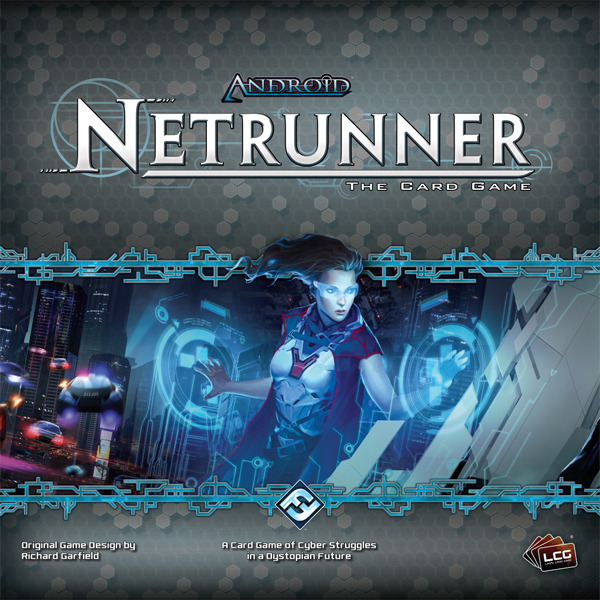
There’s a sense of ownership that comes with customizable games like Netrunner. Sure, you can play with the prepared decks that come in the box, but most of the fun comes in designing your own kit to bring to the table and play against your friends.
And, hopefully, absolutely destroying them.
Netrunner is a card game set in a cyberpunk future where giant corporations have amassed near total power over human interests, and hacker run against their computer systems for diverse (if generally shady) reasons. One player plays as one of these megacorps, trying to advance their secret (and generally shady) agendas, while the other plays a runner, trying to steal those agendas—if they don’t die trying.
Each side has tools available to help them. The corporations, for instance, have Ice—short for Intrusion Contermeasures Electronics, they’re security programs that try to slow down, stop, or punish the runner for daring to approach their servers. The runners, meanwhile, has a selection of handy icebreakers, which do just what they say on the box. And that’s just the start—the corporation also has assets, upgrades, and operations, while the runner has hardware, resources, and events.
All of them cleverly designed to beat your friends and have fun doing it.
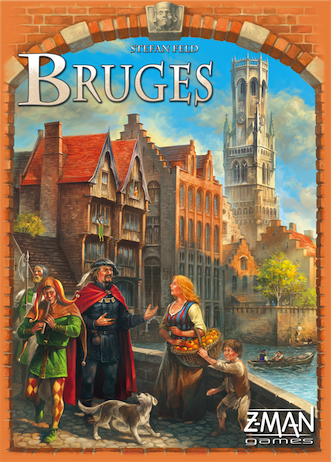
 Board game designer Stefan Feld had an eventful year—Bruges is just one of four of his board games released in 2013. In it, the players take on the roles of ambitious residents of the titular city with the ultimate goal of… well, it’s not exactly clear. Being the most esteemed landlord, maybe?
 It’s hard to imagine a rewarding game can come of sixteen cards and a handful of cubes, and the little red velvet pouch it comes in certainly doesn’t help.
 Groom Porter