 2-6 players, 15 minutes
Coup attracted some attention after it’s first limited release, and so Indie Boards and Cards picked up the game, ran a very successful Kickstarter campaign, and transplanted the game from its sixteenth century European setting to the far-future dystopia of their popular game The Resistance. So, what do these two settings have in common?
As it turns out, a lot of lying to your friends.
At the start of the game, every player gets two coins is dealt two cards in secret, representing two characters the player can influence. You might be chummy with the duke and have the contessa keeping an eye out for you, or you might have a couple of thieving captains owe you a favor for services best left unspecified. Functionally, it’s a game of hidden roles, but unlike most of those games where you are what’s on your card, it wouldn’t make sense for you to be the duke and the contessa, or, for some reason, a double captain.
Your goal in the game is to eliminate the other players by taking away their influence—you want to be the last one standing with any political clout. The most straightforward way to do this is to pay seven coins to launch an eponymous coup, which automatically forces a specified player to give up one of their cards. You could use an assassin for less than half the cost, but they can be blocked by the aforementioned contessa.
Then there’s the exciting way—lying.

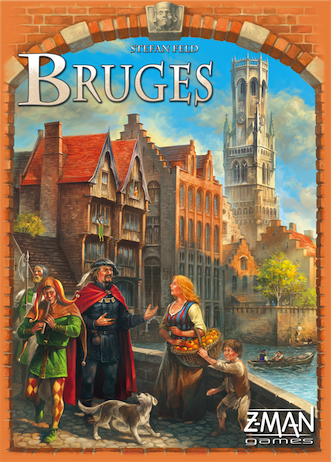
 Board game designer Stefan Feld had an eventful year—Bruges is just one of four of his board games released in 2013. In it, the players take on the roles of ambitious residents of the titular city with the ultimate goal of… well, it’s not exactly clear. Being the most esteemed landlord, maybe?
 It’s hard to imagine a rewarding game can come of sixteen cards and a handful of cubes, and the little red velvet pouch it comes in certainly doesn’t help.
 Groom Porter